

Choosing Your Career Path, a Practical Guide for Young People and Graduates
Five practical steps to choose your career when you are torn between your studies, your passion and the job market, with real examples.
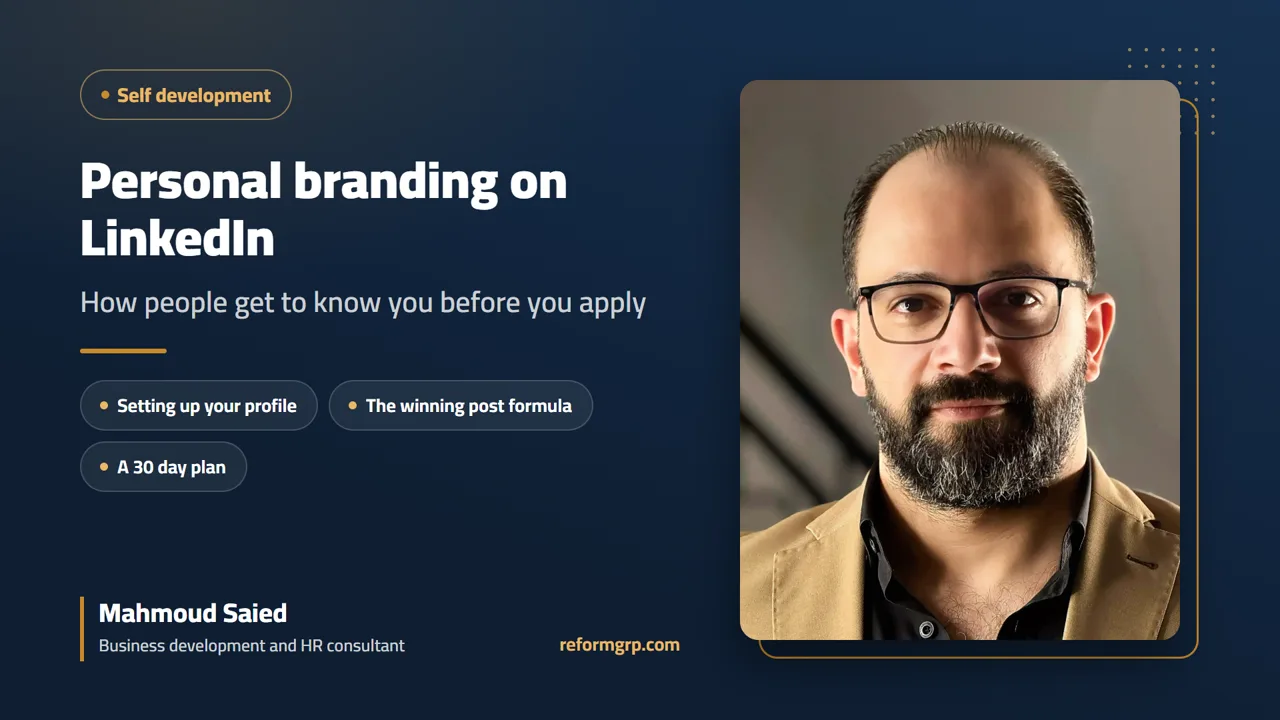
In December 2022 I filmed the first video on my YouTube channel. It was about a simple HR topic, and before publishing it I hesitated for hours, with one voice repeating in my head.
Do you think you are an expert? What will people say about you?
In the end I published it. It did not get many views, and nobody called me the next day. But I kept going, published more than thirty educational videos after it, and wrote on LinkedIn regularly. After a while I started receiving messages from young people asking about their careers, from business owners asking for advice, and from organizations inviting me to run workshops. That did not happen because I suddenly became an expert, but because people knew what I understood before they met me.
That is a personal brand, put simply. What people know about you and say about you when you are not in the room. In this guide I explain how to build it on LinkedIn step by step, even if you are a new graduate who thinks you have nothing to say.
The summary in five points
A personal brand is the professional picture people form of you, including what you are good at, the value you offer, how you deal with people and the topics linked to your name. It exists whether you pay attention to it or not. The only question is whether you build it consciously or leave it to chance.
Many recruiters open a candidate's LinkedIn profile before calling them. An empty profile with an unclear photo does not rule a candidate out, but it gives them no advantage. A candidate who writes about their field and engages smartly walks into the interview with the interviewer already knowing more than the CV says, and that is a strong start to any interview.
Before you post anything, prepare your profile. Everyone who engages with your posts will visit it, and a weak profile wastes that visit.
A clear photo of your face against a simple background with a natural smile. You do not need a professional photographer. A good phone and daylight from a window are enough. Use the banner to say something about you, such as your field or a line that sums up what you offer.
The headline is the most important line on your profile, because it appears with your name everywhere. The most common mistake is for a job seeker to write only a phrase saying they are looking for an opportunity. That phrase tells the reader what you need, not what you offer them.
Try this formula. What you do, for whom, and what sets you apart.
Write the about section as a short story, not a list of qualities. Who you are, how you came to your field, what you are good at and what you are looking for now. Write it in the first person, as if speaking to someone in front of you.
Under each job, internship or volunteer role, write what you achieved, not what you were assigned. Instead of responsible for answering customers, write I answered more than sixty customers a day and helped reduce repeated complaints after suggesting ready reply templates.
Add the skills related to the job you are targeting, not every skill you know. And ask for a written recommendation from a manager, colleague or trainer who worked with you, because a word from someone else is stronger than any description you write about yourself.
This is the question that stops most young people. I heard it at a workshop in Alexandria in very direct words.
I graduated only a year ago. What would I write? I am not an expert in anything.
The answer is that you do not write as an expert, but as a learner sharing the journey. People engage with an honest journey more than with ready-made advice. Here are five kinds of content anyone can start with.
A successful LinkedIn post has a simple structure. A first line that stops the reader, then a short story or situation, then the lesson, then a question that invites engagement. Write in very short paragraphs, because most readers scroll on their phones.
Here is an example of a post written by a participant at a workshop in Port Said after applying this formula.
I was rejected in 7 interviews in a row.
At the eighth interview I asked the interviewer one question at the end. What would make me a stronger candidate?
He said, your answers are too general, and there is not a single example from real work.
Since that day I prepare 3 real situations with numbers for every interview.
What is the most important feedback you heard in an interview that changed your approach?
A simple post, with no claim to expertise, but honest, useful and inviting others to take part. That is exactly what makes people engage.
In the first weeks few people will see your posts, and that is normal. So start by engaging before posting. Choose twenty to thirty people in your field who write good content, and leave real comments on their posts that add an idea or an experience, not just thanks or great article.
A good comment shows up for the author's audience, leads people to visit your profile and builds relationships with people who may open doors for you later. When you send a connection request, add a short note saying why you want to connect, which raises the acceptance rate a lot.
| Week | What to do |
|---|---|
| Week one | Update your photo, headline, about section and experience, and add the skills tied to your goal |
| Week two | Follow thirty people in your field and leave real comments on three posts every day |
| Week three | Publish your first two posts, a lesson you learned and the takeaway from a course or book |
| Week four | Publish a post about your journey or a mistake you learned from, and ask someone who worked with you for a recommendation |
After the first month, settle into a rhythm you can keep, one or two posts a week with a little daily engagement. Most importantly, tie your posts to the skills you are actually developing, as I explained in the guide to self development in practical steps.
A personal brand is the professional picture people form of you, including what you are good at, the value you offer, the topics linked to your name and how you deal with people. It always exists. The difference is whether you build it consciously or leave it to chance.
Yes. A personal brand helps an employee get promoted and move to better opportunities, makes recruiters know them before they apply, and protects them when companies change and cut jobs.
One or two posts a week are enough to start, with a little daily engagement on other people's posts. A steady rhythm matters more than posting a lot in a short period.
Write in the language your target audience reads. If you are targeting local companies in Egypt and the Gulf, Arabic reaches further and gets more engagement. If you are targeting international companies, English suits better, and you can mix the two from post to post.
Usually not, if you follow three rules. Do not publish confidential information or internal figures, do not mention clients without permission, and do not criticize your company publicly. Writing about professional lessons in general also helps your company's image.
When I published my first video, I did not know that this small step would open doors I never imagined. The secret was not resources or experience, but consistency, honesty and sharing what I actually knew.
Your personal brand is built post by post, comment by comment and situation by situation. Start today by updating just your headline, then write your first post this week. And if you are moving from one field to another, the guide to changing your career path shows how to tell the story of your move with confidence.

Business development and HR consultant, and founder of REFORMHRM, the HR division of Reform Group. He writes practical guides for young people and employees on careers, soft skills and handling work pressure.
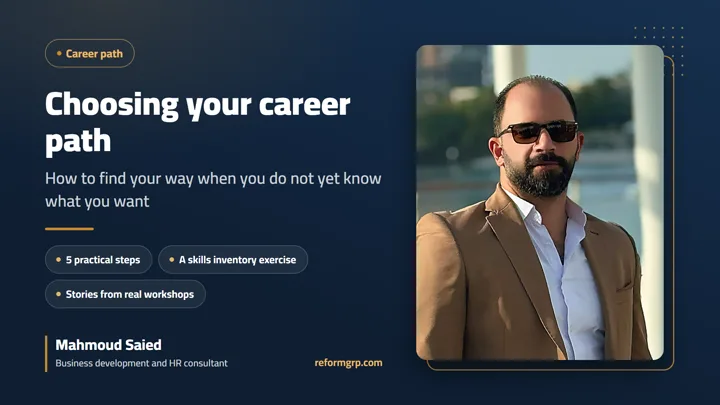
Five practical steps to choose your career when you are torn between your studies, your passion and the job market, with real examples.
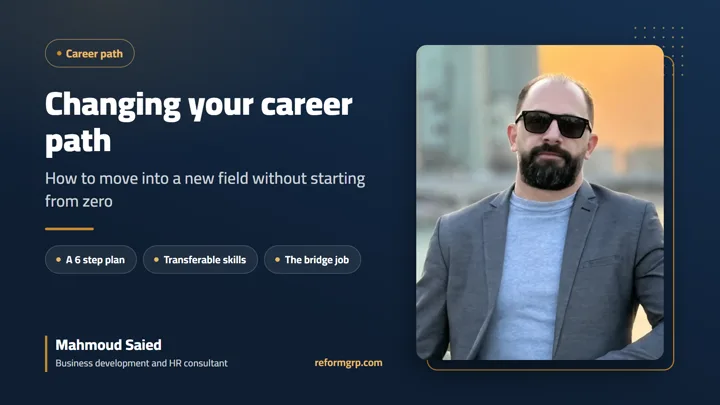
A six-step plan to change fields, transferable skills, and how to explain the move in an interview.
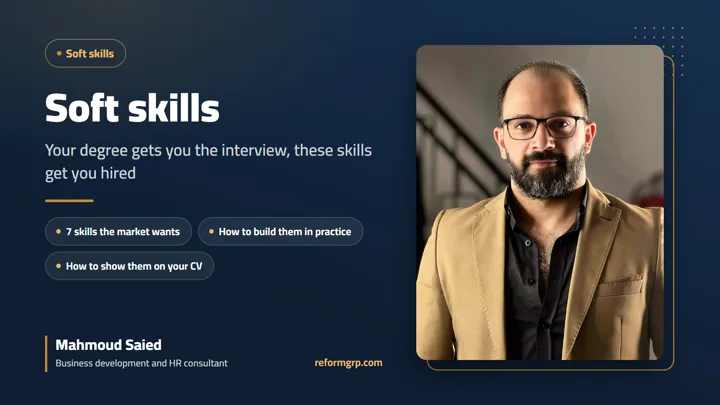
The seven skills employers in Egypt and the Gulf ask for most, and how to develop them and prove them in your CV.
Register for job seeker services, or book a free 30-minute session.